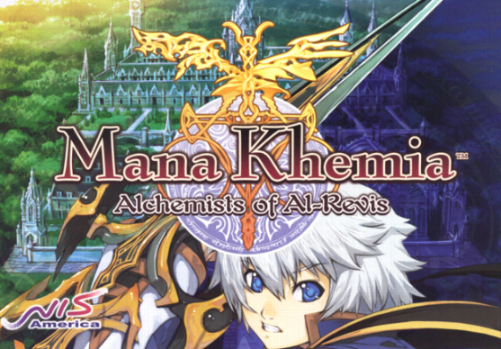
Mana Khemia: Alchemists of Al-Revis is a delightfully quirky PlayStation 2 JRPG that blends traditional turn-based combat with gathering and crafting elements. All of this is wrapped inside a school-life game, similar to what you might see in modern Persona titles or Trails of Cold Steel. As part of the greater Atelier series, the game stands strong by itself, focusing on character-driven storytelling rather than a broader world-driven narrative.
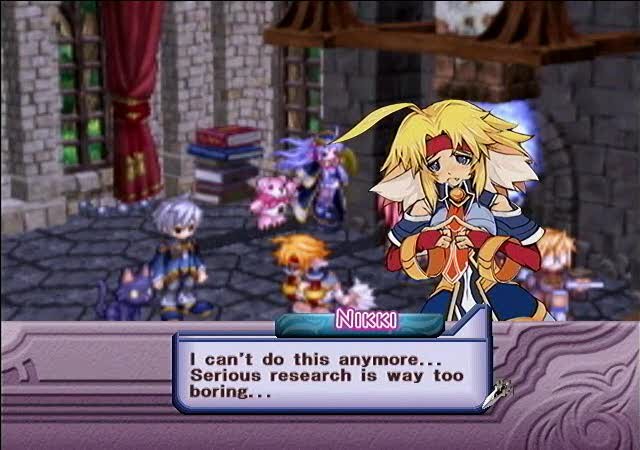
Visually, I adore this title. It has a charming art style, the sprites—both in-world and portrait—are expressive, and all the environments are beautifully drawn with unique feels to each of them. The animations are very well done and keep things interesting when you unlock a new special attack or spell to use. While the graphics aren’t going to blow anyone away like Metal Gear Solid 2 or Final Fantasy X, it holds its ground by maintaining a consistent and pleasing style.
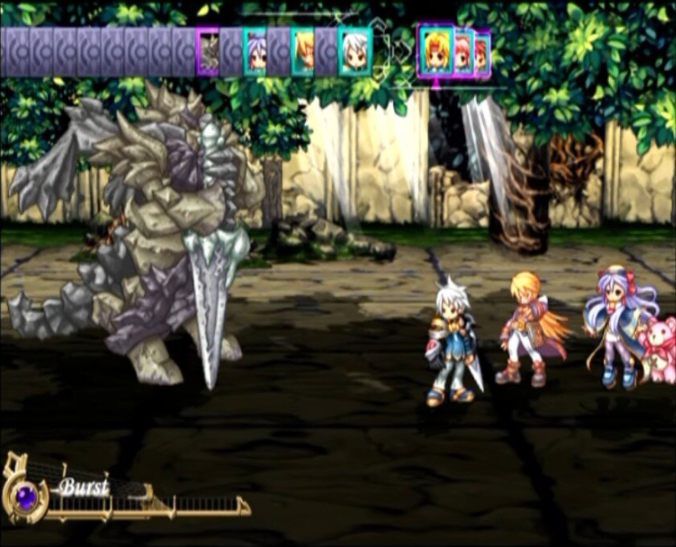
Gameplay in Mana Khemia can start out frustrating, especially near the first boss, but becomes really solid and rewarding. What I will comment on is the initial difficulty curve. While most early fights in JRPGs are used to give players a hands-off way to test out their abilities and learn what to do (and what not to do) in combat, they also serve as a way to level your character by grinding out early experience. This helps prepare you for fights that actually push back as they should. Where Mana Khemia falls short here is how the game treats leveling overall. Stats are tied to what I can best describe as a knowledge tree. As you learn and craft new items with alchemy, your party will gain new abilities and raise their stats. In a bottle, I like this way of leveling a party, but early on—when you’re unable to make new things and are stuck behind recipes that only unlock through the main story—you can easily feel underprepared for some early fights.
The first major boss you encounter as part of a school assignment had me feeling like I should give up or revert back to a way earlier save to see if I missed something critical that would have raised my party’s stats enough to handle the multiple-wave battle. However, once I conquered that fight, the game opened up significantly, making that first encounter stand out as one of the most difficult in the game. Maybe this isn’t a problem other players will encounter, but it stuck with me enough that I felt I should make note of it. The rest of the fights in the game are no cakewalk, but you can overcome them and be properly prepared just by making new items when they become available and by using a bit of brainpower to get the most out of your team.
The game is filled with lovely atmospheric tracks, some of which I still can’t get out of my head. While it doesn’t use music as emotionally as some other JRPGs, it absolutely fulfills its purpose. Additionally, I want to give props for the inclusion of voice options—being able to choose between English or Japanese voice actors is a feature a lot of JRPGs lacked at the time, and I love having that choice.
Narratively, Mana Khemia delivers. It’s hard to talk about the story without spoiling anything, but it really pulled hard at my heartstrings. The game starts off with goofy villains and a lighthearted tone, but then gradually transitions into a full-on sense of dread right up until the credits roll. This title will get you invested in the characters and their stories. I also want to give credit to the ending, where who you spend the most time with actually matters. Not only is hanging out with your party members during downtime essential for unlocking the true ending, but it also results (in my case) in a cute special ending with the character I bonded with most. It’s something that reminds me of Stella Glow—a game that would come out eight years later.
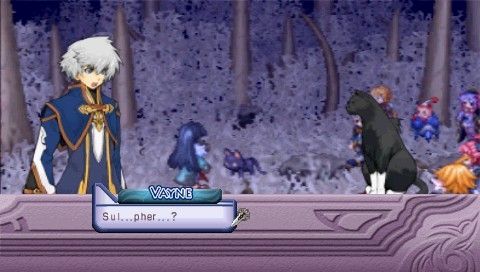
Lastly, I want to talk about bugs. While this isn’t something that would ruin my experience unless game-breaking, I feel like I should mention it. Mana Khemia does have some visual bugs in cutscenes that—if I had to guess—would be almost completely hidden if played on a CRT television. Characters will sometimes be seen right on the edge of the screen as they’re called in and out of scene. While this doesn’t personally bother me, it’s something I consistently noticed in almost every cutscene. Due to CRT overscan, the edges of the screen were often hidden from view, which developers used to mask offscreen transitions. As a PlayStation 2 title, this game was clearly developed with that in mind. While I now have a much better setup for playing my older consoles, originally playing this on my LCD TV meant I just had to deal with it.
Mana Khemia: Alchemists of Al-Revis is a hidden gem of the PS2 library. It’s creative, charming, and full of life. It may not be the flashiest JRPG, but the heart and soul that went into it makes it a must-play for any fan of turn-based role-playing games.


 RIP - Reviewing Intellectual Property
Leave a comment